
writing / general / i-told-john-lewis-to-build-a-shopify-rival
I told John Lewis to build a Shopify rival. Here's how that went.
- Published
- 24 Nov 2026
- Series
- General
- Read
- 15 min

Digging up 2020
I recently found an old strategy assignment from October 2020. Think Covid lockdown, the high-water mark for online courses. This one was written for Scott Galloway's online business courses venture, Section.
The brief was to act like a management consultant and apply "Prof G's T-Algorithm" set of frameworks to a company of our choice. I picked John Lewis, the British department store, owner of Waitrose supermarkets and home to quintessentially middle class problems. It's also employee-owned: its staff are "Partners" who share the profits through an annual bonus. Remember that, it matters later.
The T-Algorithm looks at what makes a trillion-dollar company. In 2020 that club was a handful of Big Tech names, led by Apple. So could the same frameworks help a then-beleaguered John Lewis?
My 2020 critique was simple. John Lewis sold too many third-party goods you could buy cheaper online, especially on Amazon, and its in-store experience had barely changed in 50 years. The UK had recently become a kill zone for high street retailers, with fellow department stores Debenhams, BHS and House of Fraser all notable victims.
So I made three big recommendations. Each one was really a prediction about where retail was heading. With the aid of AI (thanks, Claude), I'm willing to share and mark my homework and see whether my predictions aged well like fine wine, or badly, like milk left in the sun!
What I told John Lewis in 2020
- Lease 90% of floor space to brand concessions
- Sell a Prime-style membership subscription
- Build a tech and logistics platform
We'll mark each of these as a Hit, Miss or Too Soon.
But, before the marking, some context…
What's changed since 2020
A decade ago, John Lewis was the darling of the high street, making around £370m a year: a little over 3p of profit for every £1 customers spent. Then it slid. In 2018 its half-year profit fell 99%, and by the time I wrote my deck it was making £123m on £11.5bn of sales, down from 3% to 1% margin. So the outlook in 2020 was bleak and the case for change compelling.
Since then it's been a rollercoaster: a £78m loss in 2022/23, then back up to £134m profit on £13.4bn of sales last year. Steadily growing revenues but back to just 1% margin for those keeping track.
Credit where it's due: it has avoided the fate of Debenhams and House of Fraser, topped the UK Customer Satisfaction Index in 2026 and paid Partners a bonus for the first time in four years. Under chairman Jason Tarry, a former Tesco boss, it has gone back to retail basics: investing in stores and service, tightening costs, and leaning on Waitrose's grocery sales that grew 7%.
But breaking even is a recovery, not a reinvention or rejuvenation. Fixing the finances isn't the same as fixing the customer proposition or the long term operating model. Which is where my 2020 consultation still has something to say.
Two forces are now shaping the 2026 retail outlook:
- A K-shaped economy. Better-off households are doing fine while most are squeezed. In April 2026, UK consumer confidence fell to its lowest level since 2023. Shoppers are cutting back everywhere except groceries, but they still spend on treats and milestones.
- AI is coming. If LLMs do the majority of product comparison, retailers might become even more interchangeable. Selling on price is a race to the bottom that surely only Amazon can win. It's unclear how bricks and mortar or omnichannel retailers like John Lewis should respond.
Become the landlord, not the shopkeeper
What I said in 2020: Follow Selfridges and become a landlord to brands, letting the majority of shop floorspace as concessions that brand tenants run to deliver their own customised shopping experience.
Verdict Too soon
John Lewis hasn't tried it, so we can't know for sure. But it's the part of my 2020 hypothesis I'd back hardest today. I've come armed with receipts.
The challenge in the traditional department store model is that John Lewis has to plan and buy stock months ahead, staff every floor and carry the liquidation risk when things don't sell. Like most UK retailers, it relies on Christmas and big promotions to make the year pay. This year the Partnership lost £89m in the first half, and is counting on the run-up to Christmas to finish the year in the black.
Letting floor space would reward John Lewis in three ways:
- Reliable, predictable income and cash flow from rents, plus commission on till receipts. It also removes the risk of holding stock that needs liquidating.
- A much more compelling shopping experience, with brands providing immersive spaces, luring experience-hungry customer footfall into stores.
- A simpler operating model, with less stock to buy and manage, lower staff cost and complexity and (hopefully) a higher yield from every square foot.
Letting concession space isn't a magic formula. Debenhams and House of Fraser both leaned heavily on concessions and still went bust. Execution details matter then…
John Lewis should be landlord to premium, differentiated brands, especially the ones that won't sell on Amazon or eBay because it dilutes or cheapens their brand cachet. It already has many of these commercial relationships and existing contracts. For these brands, John Lewis is the only trusted, upmarket shelf across dozens of towns outside London. Selfridges has just four UK stores; Harrods only one. John Lewis can also support these brands with a trusted online route to market via its ecommerce sites and mobile apps.
This model also opens the door to seasonal pop-ups, again paid for by brands, bringing more variety and new and unique, differentiated products and customer experiences into the store. John Lewis becomes a place trend-conscious shoppers visit to discover new products, not simply to transact at a time of need. And hopefully TikTok the doors off!
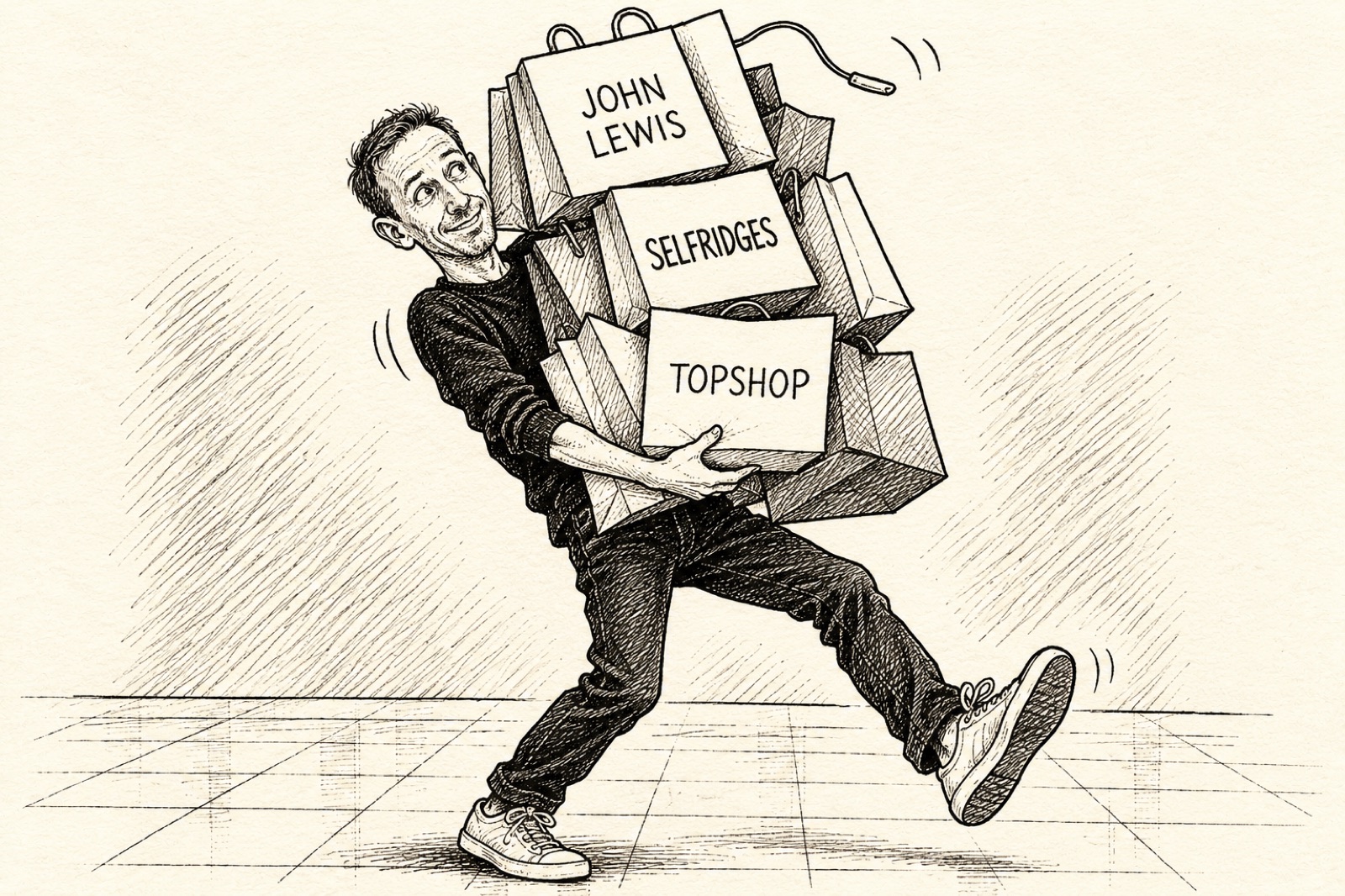
Selfridges shows what doing it well looks like. While surviving its own turnaround, five straight years of losses, it's back in profit. Customers spent about £1.6bn across its four stores and website last year, roughly half of it with brand concessions. From this Selfridges made about £80m operating profit on that. That's 5p for every £1 spent, so a 5% margin compared to John Lewis's 1%. Selfridges generated effectively the same profit on a third of John Lewis's revenue.
Interestingly, where I recommended John Lewis add yoga studios, hair salons and children's daycare to its stores, Selfridges has opened a members' club in its Oxford Street store. A notoriously ruinous business model, but London is gonna London!
Similarly Next, a mid-market high street rival, has quietly become a landlord too. It has brought in brand concessions such as Mamas & Papas, Hotel Chocolat and Costa cafes into its stores, enhancing the experience and reason to visit.
John Lewis has partnered with more third-party brands, but not as I advised. It now stocks Topshop products in 32 stores. John Lewis pays for the stock, while Topshop gets nationwide shelves without leases, staff or markdown risk. In the first half after launch, John Lewis department store sales fell 2%, with fashion the weakest category. Great business for Topshop. Unclear what value John Lewis is getting from the deal…
What am I missing?
Customer subscription bundle
Galloway's "Rundle" framework describes a recurring-revenue bundle. Think Amazon Prime: free and fast delivery, video, books and music, all paid for together in one sticky, recurring subscription that customers rarely cancel after signing up. In 2020 I proposed two bundled subscriptions for John Lewis: one for customers, one for brand business partners. The customer one was right in spirit. The brand one earns its own section below, spoiler: it's a miss!
What I said in 2020: Launch "John Lewis Prime", a paid subscription promising free priority delivery, discounts, free installation, extended warranties and in-store perks.
Verdict Hit!
Mostly. Right concept, but it needs a free tier. Crucially, John Lewis needs to combine its My John Lewis and myWaitrose loyalty schemes. It trialled a combined card in 2018 and has been trying to merge the two IT systems ever since. With an eight-year wait and counting, should we be anticipating the GTA 6 of loyalty cards? Let your imaginations run wild…
Taking a look at the comparable loyalty market. Selfridges Unlocked is free with tiering that rewards time in store as well as purchases.
Tesco Clubcard has free and paid options, with enhanced discounts for members paying £7.99 a month.
Costco arguably targets a similar customer to John Lewis, with consumer memberships starting at £42 a year. Members need to be affluent enough to haul an SUV's worth of goods home and store it in an underground bunker (I assume), yet value-sensitive enough (nobody said stingy!) to do the haulage themselves for the bargain prices. Membership fees make up about half of Costco's operating profit, and about 90% of members renew each year. Working both sides of the K-shaped economy!
Again, the devil is in the detail: crafting a compelling proposition for both free and paid tiers, where both feel they're getting value and reward for their loyalty.
Tech and logistics play
What I said in 2020: Build a white-label e-commerce platform to rival Shopify for luxury brands. Sell fulfilment as a service through John Lewis's warehouses and delivery vans. Bundle both into a software offer for brands.
Verdict Miss
The idea was sound. My choice of company and timing wasn't. Next built exactly this, launching Total Platform in 2020. It runs the website, warehousing and distribution for brands such as Reiss and Joules for a share of their sales. It made about £71m profit in the year to January 2025, roughly 7% of Next's total. Much of its value came from Next taking stakes in the brands it serves. So this model could work…
Shopify, meanwhile, became the industry standard for ecommerce sites, processing $378 billion of merchant sales (Gross Merchandise Value) in 2025. But Shopify couldn't make my fulfilment idea work. In 2022 it paid $2.1bn for Deliverr to build its own warehouse and delivery network. A year later it gave up, handing the whole logistics business to specialist Flexport. Shopify took Flexport shares and wrote off about $1.3bn, making Flexport its official logistics partner. CEO Tobi Lütke called logistics "a worthwhile side quest". Shopify went back to its main focus, ecommerce website software.
If Shopify couldn't make warehousing and delivery pay, John Lewis was going to struggle. In 2020 it was shedding stores, had sold its Ocado stake back in 2011 and had none of the capital, appetite or tech expertise to pull off a logistics and software play.
What I missed
The delivery fleet was never the asset. The collection network was. I blame this mild fever dream on my lockdown agoraphobia for imagining the unending appeal and growth of home delivery.
The most useful thing John Lewis owns isn't its vans. It's the hundreds of John Lewis and Waitrose stores where you can collect an online order. Even in 2019, 57% of John Lewis online orders went through click and collect, three-quarters of them picked up at Waitrose.
And doorsteps have got worse since. Last year 4.8 million UK homes had a parcel stolen, a record £667m of goods. Two-thirds of consumers have had a delivery problem.
And it gets even more embarrassing for me. John Lewis was already testing the idea! In 2019 it let Boden customers collect from 30 Waitrose stores. In October 2020, the month I wrote my deck, it added Sweaty Betty. I used Sweaty Betty in that deck as an example of a great store experience. I completely missed it as an example of an actual live partnership.
What I'd tell John Lewis now
The 2020 thesis carries most of it, with a few tweaks. But the biggest change since 2020 is AI, so let's start there.
1. Be the advisor you trust when AI does the shopping
Remember that race to the bottom on price? That's where most expect AI comparison to bite hardest. But the longstanding trust of British consumers is harder to disrupt and this is where John Lewis reigns supreme.
So how does John Lewis capitalise on this? Build an AI assistant into the Waitrose and John Lewis websites and apps, and use the phone's camera, microphone, Bluetooth and GPS to join up the digital and in-store experience. Scan a QR code or snap a photo, and the product is already loaded.
"Does this contain nuts?" "Will this fit me?" "Can my 5-year-old use this?" "Will it work with my speakers?" "Can I try this?" A human advisor is on their way to help you!
John Lewis has a ton of data to make its assistant smarter, safer and more reliable than a general chatbot: verified ingredients and allergens, safety certifications, sizes, and your purchase history. It should know you're a medium in one brand and a small in another, and read your past reviews to learn what you always send back. Just as important are the guardrails. A general chatbot will confidently tell you anything; John Lewis AI should know when to stop and fetch a Partner. For the metric and business value hungry, this crucially means fewer returns and bad reviews.
For tech-savvy shoppers already tied to Claude (I plead guilty) or ChatGPT, offer John Lewis as a connector inside those apps too. There's likely a monetisable data service to sell to the LLMs, or a deal to be the promoted destination for UK shoppers.
2. Become the landlord, properly
As before: brand-led floors, with specialists running categories under leases that keep the John Lewis promise. The famous price promise may have gone, but the promises that matter more remain: guarantees, easy returns and advice you can trust. Tenants sign up to those. Think Richer Sounds, which I praised in 2020, running the TV and audio floor. Or Mamas & Papas, which already runs more than 30 shop-in-shops in M&S and Next. Outsource the specialism, keep the promise. Keep John Lewis-run departments by exception.
Opening up floor space for more experiences and "dwell time" is an overlooked opportunity. Avoid the urge to display every product SKU on the shop floor. Less is more. A few excellently presented top-selling hits beats every stocked item on display. Focus on the bangers: think Oasis's "Wonderwall" and "Don't Look Back in Anger". Nobody queued for Wembley to hear "Little James". The UK tax regime actually rewards this, with lower business rates on warehouse space than on shop floors. One for the accountants! Quick rule of thumb: "does this feel more Apple Store or Costco?" Bias towards Apple!
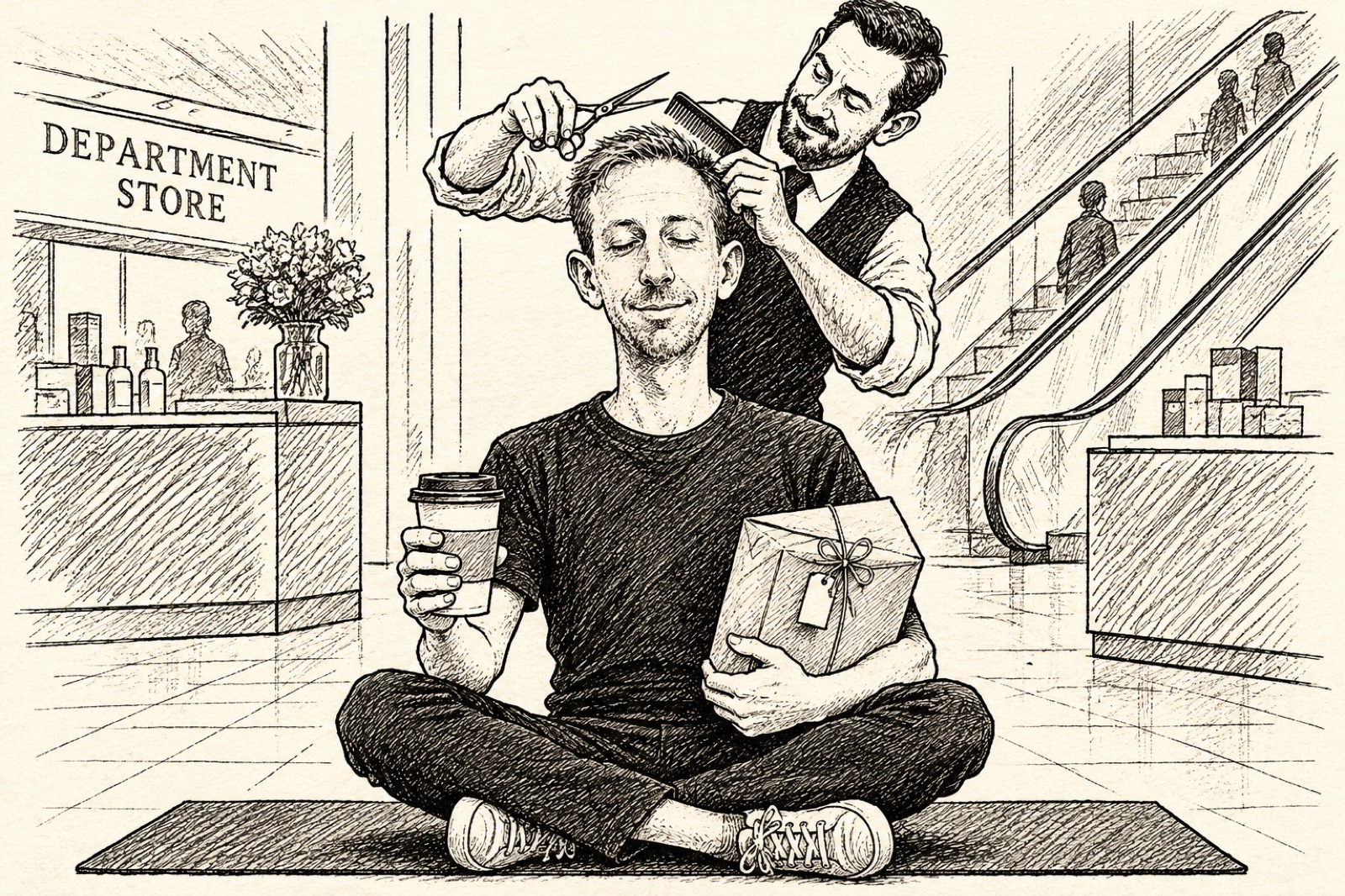
Store refurbishment is expensive, but done well can be transformative. John Lewis knows this: between 1999 and 2004, it spent about £107m rebuilding the prestige Peter Jones store on Sloane Square, without ever ceasing trading. The architects cut a seven-storey atrium with 14 escalators through the middle: less floor space, but allowing customers to see the whole store from multiple floors. So we know the game is about better floor space, not more floor space.
John Lewis is budgeting £800m on refurbishing its 36 stores by 2029. But there's no need to bet the farm on the concession model. I'd test it in three or four regional stores with a fair chance of success, each compared with a similar store left as is. Refurbish one or two floors with the concession-led experience. Sign tenants on 2-3 year leases and judge the results over 12-24 months to account for the seasonality of retail. If tenants pay for their own fit-outs, converting one floor in three stores would cost, by my rough estimate, £7.5m to £24m, just 1–3% of the budget. Test location by location and see what works.
And sell brands more than square footage. Call it a rundle for brands: the space, plus the extras only John Lewis can offer. Shopper insight from the merged loyalty data. A place in the app and the AI assistant. Collection and returns through every Waitrose. In-store and digital media to launch new products. Sold on multi-year commitments, it turns rent into stable, recurring revenue, and gives the best brands a reason to stay.
3. Run the middle aisle
Scale in-store pop-up shops, displays and experiences for emerging new and seasonal products and brands to keep the in-store experience novel, engaging and fresh. Steal Costco and Aldi's seasonal, time-limited offers, AKA "the middle aisle", giving customers a reason to come back week after week.
Lean into seasonality and experiential displays, not just a pallet of boxes (see Apple vs Costco above). Offer free sampling and product demos to drive customer data acquisition for long term retention. Appeal to the trend-setting consumers who would use John Lewis as a font of inspiration and social media content. Let's go viral!
4. Supercharge the Little Waitrose roll-out
Who knows if the Amazon delivery driver will hurl my kid's Christmas present into my neighbour's driveway for their dog to maul to pieces. But if I'm using click and collect from John Lewis or Waitrose, I'm damn sure my package will be safe and sound. Just don't drop it before getting to the car!
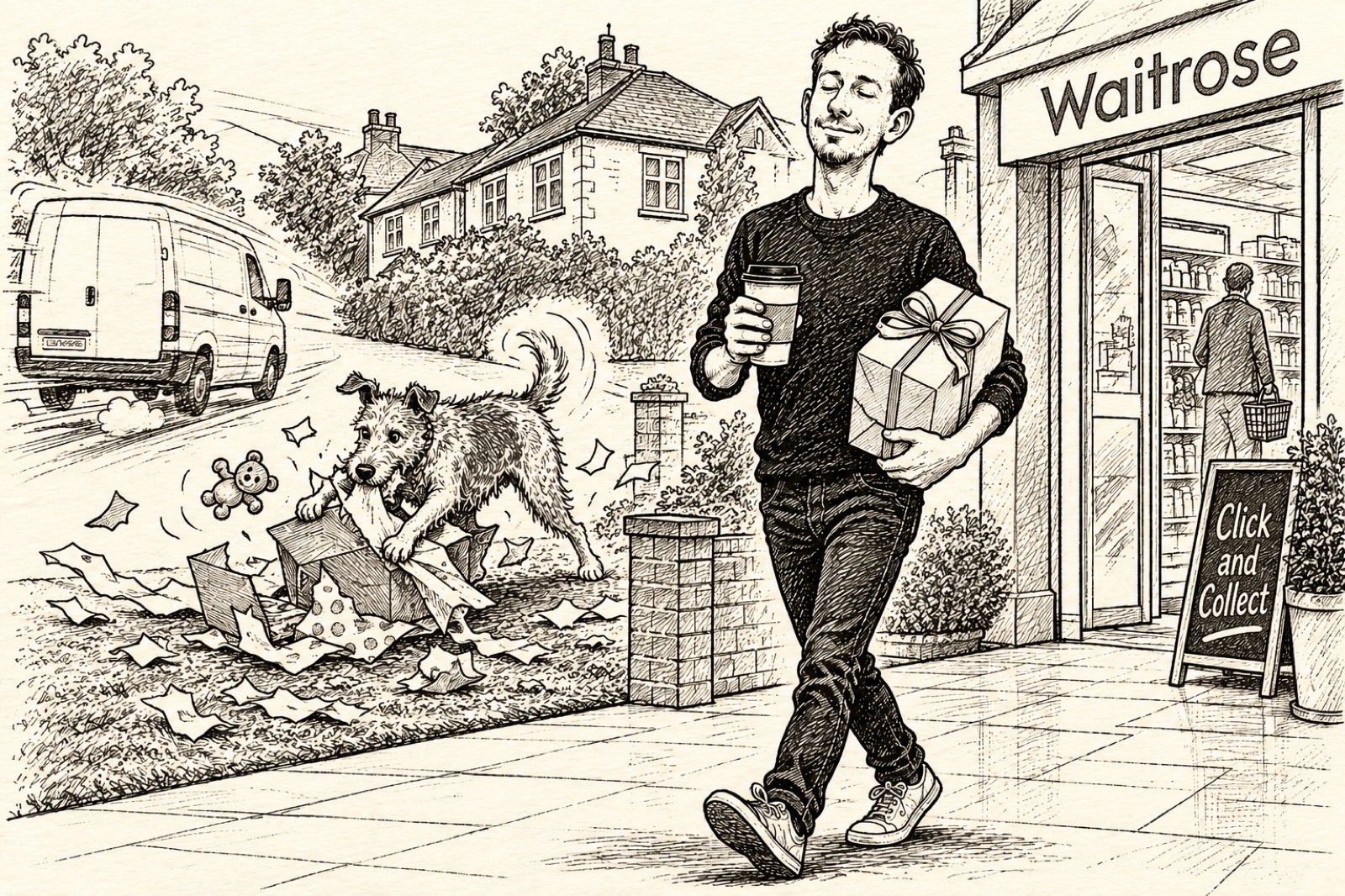
Make collection and returns (with a latte) a fixture at every Little Waitrose, opening collection points for third-party brand partners. Every parcel collected is a trip into a Waitrose. Waitrose already plans up to 100 new Little Waitrose shops by 2029. Can we go faster? Upscale the coffee bar and integrate a returns, repairs and services counter in every location.
What about the Partners?
This plan impacts a lot of jobs. The John Lewis Partnership is employee-owned, so above all this deserves a candid answer.
Unfortunately playing it safe isn't safe anymore. In 2024, the Partnership reportedly considered cutting up to 11,000 jobs before 2028.
Some functions, such as buying and merchandising for tenant-run floors, will shrink. But the landlord model has an opportunity to evolve or reinvent roles as much as it removes them. Partners are the differentiated, human service offering, think hosts, advisors and stylists, solving real life problems face-to-face.
Behind the scenes come leasing, brand partnerships and media sales. Leases could go further to smooth the transition and require tenants to offer roles to Partners first, with a grandfathered Partner bonus so long as they keep working in a John Lewis location.
Business profit funds the bonus. Partners got a 2% bonus this year, the first since 2022. A steadier, higher-yield model is how growing bonuses become the norm.
Focus, and win with what you already own
The lesson for product, strategy and business leaders? Two lessons, really.
First, focus. The line usually credited to management thinker Peter Drucker is "do what you do best and outsource the rest". Shopify learned it the $2.1bn way: it kept the software and handed the warehouses to a logistics specialist. My worst 2020 ideas asked John Lewis to do the opposite and build things it had no clear advantage in: a software platform, a fulfilment business. My best idea, the landlord model, is Drucker's point applied to the shop floor: let brands do what they do best, and let John Lewis focus on its strengths, i.e. curating an environment implicitly trusted by UK consumers.
Second, play to your unfair advantages. My best ideas, then and now, use what John Lewis already had: prime space in dozens of towns, the trust of upmarket customers, premium brands that won't go near Amazon, customers who visit Waitrose every week and hundreds of shops where a parcel can wait safely. Even the AI play only works because of the trust and customer engagement.
The collection network is the sharpest example. It was boring, yet hiding in plain sight.
Product teams make the same mistake. We often chase the shiny new bet instead of fully exploiting the advantage we already have. Where is our standout area to win? For John Lewis, the answer is space, attention and trust. Strategy is mostly noticing what you already have.
Agree or disagree, or have more to add? Let me know!