writing / business-of-rugby / more-eyes-on-the-game
Part 2 of 2
Professional, but never commercial
More eyes on the game. Free to air games, cheaper tickets, more clubs, and one body accountable for growing English rugby's audience.
- Published
- 13 Nov 2026
- Series
- Business of Rugby
- Read
- 14 min

If you haven't read Part 1, here is the TLDR:
English rugby turned professional in 1995 and spent the next thirty years solving the wrong problem. The sport looked at football's Sky TV money and copied the monetisation playbook, without having football's audience or ticket sales to afford the player costs. The result is ten clubs losing money, eleven more who have disappeared from the top flight and a league where, if rugby had football's financial sustainability rules (almost) every club would be fined and docked points every year! The root cause is that no one in the sport is actually accountable for growing the overall audience.
This is what that accountability would look like. Some of it is work any PREM club CEO could put on their roadmap tomorrow. Some of it needs the sport’s institutions to rebuild and rewire themselves.
Look across the Channel
This is not simply a rugby problem. It is an English rugby problem.
France has roughly the same population as England and a similar rugby-playing base. Yet France runs two fully professional tiers, the Top 14 and Pro D2, totalling 30 clubs between them. Toulouse’s annual revenue is bigger than any English PREM club. The Top 14 fills stadiums in regional towns the size of Northampton or Gloucester every week. Pau, a town of 80,000 in the foothills of the Pyrenees, fills its 14,000-seat stadium nearly every home game. Visiting Leicester fans recently returned from their Champions Cup away day raving about the food, the local wine, the music, the sense of occasion. If not the final score…
The French model isn't perfect. The salary cap is softer, wages are higher, and clubs still occasionally have financial scrapes. Here’s what France has got right that England hasn't: regional distribution, with clubs spread from Vannes in the North-West, to Oyonnax in the East, Toulon in the South-East and Bordeaux in the West as well as two clubs in Paris. Matchdays are a local spectacle and there is a free to air TV deal covering the top two divisions with broadcasts running from Thursday nights to Sunday afternoon.
Zero sum to ecosystem
Every structural problem in English rugby traces back to one operating model. Ten clubs compete with each other for a slice of a small pie. The RFU runs Twickenham and the international match cash cow. The second tier CHAMP below is treated as a sump for the clubs the PREM doesn't want. Nobody has a job description that says "grow the audience." Everyone is optimising for their own slice of what already exists. Separate ticket sales, sponsorship, merchandise, concessions and TV deals.
The sports that figured this out decades ago were American. Franchises within the NFL, NBA, and MLB are not twenty or thirty competing businesses. They are league co-owners where franchises cooperate on the things that grow the pie (national TV rights, salary caps, revenue sharing, scheduling, data, digital) and only compete on the field. The strength of the Buffalo Bills team and business is in the interest of the Dallas Cowboys, because the league's TV deal is worth more when every market is competitive. In English rugby today, nobody at Bath has an explicit incentive to drive Bristol's ticket sales. This was abundantly clear for Bristol’s flagship “Big Game” match in 2025 at Cardiff’s 73,000 capacity Principality Stadium against their local rivals. While Bristol vigorously promoted the day selling over 51,000 tickets, there was radio silence from Bath’s marketing, PR and commercial teams.
Another sport to take notes from is Formula 1. Since Liberty Media bought F1 in 2017, the commercial rights, broadcast, digital estate and brand have been run by one entity. The teams compete fiercely on the track and run their own operations off it. Revenues are shared by formula. The product has grown faster in those years than at any previous point in its history.
The wrong answer
Someone else is already trying to solve this. R360, the proposed breakaway league fronted by Mike Tindall borrows from (the ill-fated) LIV Golf; twelve international city franchises travelling to sixteen venues on a grand prix model, no promotion or relegation and a shortened playing calendar with players set to earn over £1 million each!
The appeal (to players) is obvious. The problem is that it misses what makes rugby interesting. Nobody at Gloucester wants to watch their team play a franchise from Dubai or San Francisco. They want to beat Bath or the "always cheating" Leicester. Bath fans want to beat Gloucester and Bristol. The game is passionate, regional, tribal. Just ask Scottish fans at a Calcutta Cup match against England!
R360 is a predictable response to a sport that isn't fixing itself. But it fixes none of the structural problems in Part 1 and it burns the tribal equity that makes games special.
Distribution: find the fan, hold the fan
The single clearest audience-acquisition failure is that a casual fan is unlikely to stumble upon a game by chance. Fix this first because none of the other recommendations work if new fans can't find the game.
Key moves
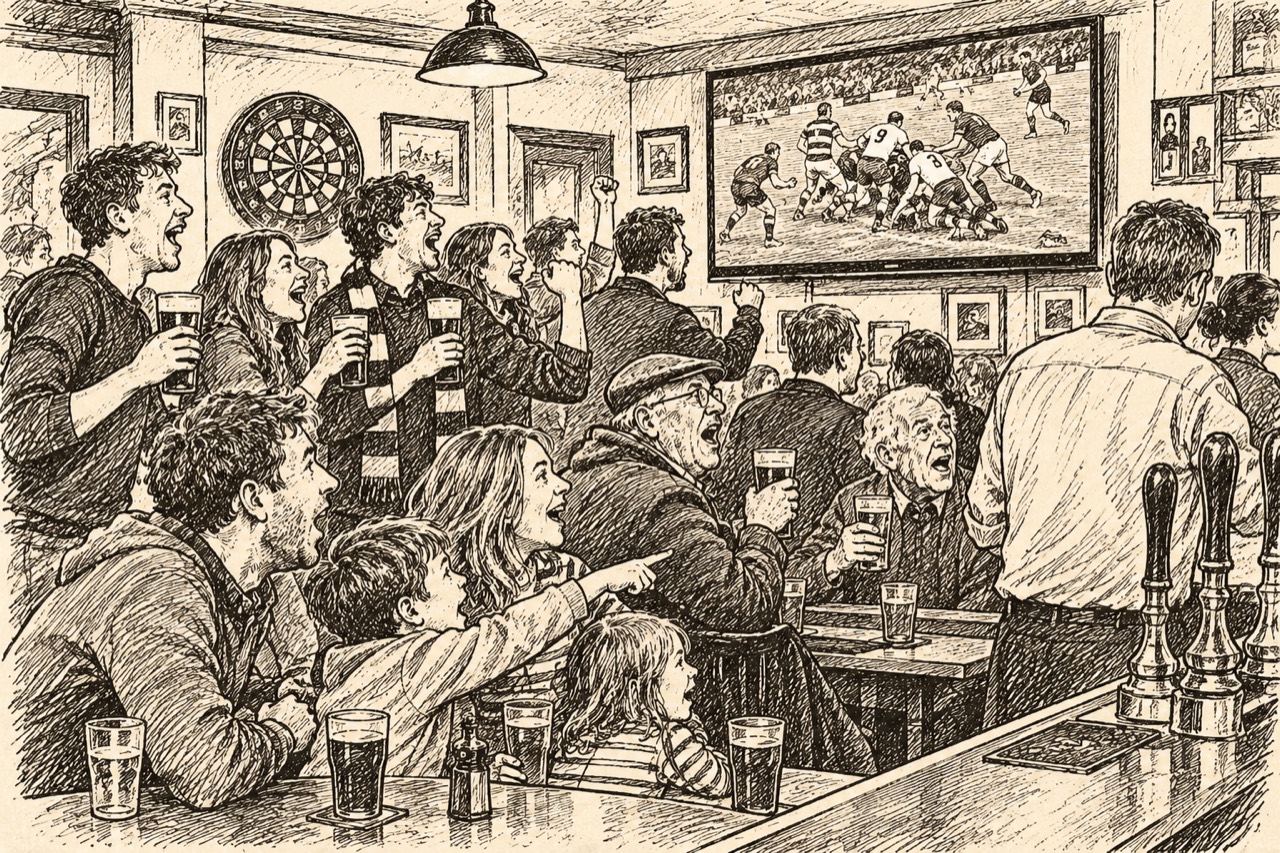
- Make every England men's home international free to air. Not just the Six Nations. The 2023 World Cup semi-final peaked at 8.5 million viewers on ITV. International rugby is where new fans are made. Putting it behind a Sky, TNT or Amazon paywall for half the year is self-defeating. By good luck, in 2026 this has become a reality with ITV buying rights for the seven rounds of the biennial Nations Championship. What happens post the 2027 World Cup is less clear.
- At least one PREM club game every week on free to air TV or streaming. A fan who knows there is always a game on a Saturday afternoon is a fan who builds a habit. Again this season ITV will broadcast 7 live games. A step in the right direction…
- Unify the paid rights. If paid subscription money is needed there must be one subscription that covers every club competition; PREM league and cup as well as the Champions Cup. The current setup, where a PREM fan who wants to watch the Champions Cup pays Premier Sports on top of TNT is taxing its own supporters for their dedication and loyalty.
- Stop social clips takedowns by rights holders. The NBA figured out a decade ago that liberal YouTube and TikTok use grows global fandom. Rugby's TV rights holders still treat fans and podcasters uploading clips as copyright thieves rather than a free marketing team. More eyes on the game.
Marketing: beyond the brass band
The sport's distribution problem sits on top of a cultural one. English rugby still markets itself to an audience that was watching in 1985. This audience is literally dying! The England team still opens home games at Twickenham with patriotic hymns and a brass band; tunes familiar to ex-public school boys but not a younger, broader audience. The product and matchday packaging needs to feel like 2026. Less Jerusalem, more Stormzy!
The Netflix moment
Formula 1's Drive to Survive doubled F1's US audience in five years, with the biggest gains among under-30s and women. Meanwhile, Welcome to Wrexham, Ryan Reynolds and Rob McElhenney’s streamed series on the Welsh football club they bought in 2020, has put American tourists on planes to a Welsh town that is not otherwise a tourist destination. Sorry Wrexham, but don’t hold that hotel suite for me, just yet!
Rugby had its chance with a documentary series. Six Nations: Full Contact signed for two seasons on Netflix. But season 2 was quietly cancelled after fans criticised series 1 as bland and overly staged, with little behind-the-scenes access.
Rugby should treat full access to multiple documentary series as a mandatory contract condition for national teams, club franchises, coaches and players alike. Take slices across both club and international teams (men’s and women’s). Some teams and star players would merit their own dedicated episodes or even a series. Show the promotion and relegation battles, the arguments and redemption arcs, all the blood, sweat and tears of the training sessions and changing rooms. Fans are still re-watching Living with the Lions from the triumphant 1997 tour to South Africa which followed this model. We know this works. More eyes on the game.
Pricing: make it a habit, not a luxury
Rugby's current pricing says to a new fan: this is an expensive treat. Everything about rugby’s economics requires the opposite. It needs to be a weekly to fortnightly habit. Rugby needs to focus on growing the volume of fan acquisition and retention, not per-fan revenue extraction.
Family packs need to be priced so a parent and two kids pays less than £50, bundled with food and drink vouchers. Young-adult tickets at a serious discount, with a shareable code that gets both the ticket-holder and their guest a free drink. Free or £1 tickets (in exchange for data) for all women's PREM fixtures and the CHAMP, treated as the gateway product. Cross-club promotions, so a Leicester away ticket at Sale, a) earns Leicester commission and b) gets the fan a discount the next time they are back at Welford Road.
Nothing here is radical or even particularly expensive to implement. Most of it is standard practice in US sport, the German Bundesliga and digital-led consumer businesses. PREM clubs are still focused on pricing and packaging for an existing (and mostly middle-aged) fanbase and season-ticket holders, neglecting new (younger) fans who should be filling the empty seats that are all too visible most weeks… and bringing their friends next week! Clubs would be better off giving away unsold tickets rather than let unsold inventory go to waste. Don't mark this down as lost revenue but instead zero cost marketing budget for next month's ticket sales. To borrow from digital business jargon, optimise for new customer acquisition (CAC) and customer lifetime value (LTV), not this quarter’s profit and loss. More eyes on the game.
None of this is about alienating the existing fanbase. Clubs should reward their most loyal and longstanding fans, instead of gouging them for extra cup and play-off tickets on top of season tickets. If clubs shared their data they would know exactly who attended how many games home and away over the last five years. Sell an “all you can eat” pass guaranteeing “your seat” for every home game as well as discounted away days with travel and accommodation bundles. Surely intrepid away fans travelling between Exeter and Newcastle deserve a free pint or hot cider in an away fans welcome zone after the seven-hour drive or train journey!? Make the real rugby nuts feel special.
Geography: 24 clubs, 90 per cent of England within reach
Right now, 60 per cent of English people do not live within an hour of a professional rugby club. That is the ceiling on everything the sport can do.
The direction of travel is set. Promotion and relegation has been abandoned in favour of a full franchise model by 2030. However, the current conversations seem to still be about who gets what percentage of the existing pie rather than how to grow it.
A real fix for nationwide growth is a two-tier professional league system. Twelve clubs in an expanded PREM. Twelve to fourteen in a fully professional CHAMP below it. Promotion and relegation between them so sporting jeopardy is preserved. A hard floor at the bottom of the CHAMP so no club collapses into semi-amateur rugby the way those 11 failed clubs did.
Who gets a franchise is where this stops looking like today's CHAMP and starts looking more like an NFL-style league expansion process. There will be winners and losers, with franchises awarded via public criteria, e.g. stadium capacity and facility quality, regional market, capital commitment over ten years, academy and women's programmes and (importantly) a credible route to profitability. Some current CHAMP clubs might qualify, e.g. a well-financed Rotherham or Doncaster. Others, like Richmond or Ealing Trailfinders, would not in their current locations as West London is already saturated by Harlequins. New entrants with real plans could leap in from outside the pyramid. This model looks kindly on Wasps’ proposed plan for re-emerging with a stadium in Kent. Not quite brave enough for a groundshare with Millwall F.C. at the Den in South-East London?
There is also no single franchise model. Big-city franchises in Birmingham, Liverpool, Leeds built around joint ventures with football clubs whose stadiums are underused. Small-city franchises on the Gloucester, Northampton and Exeter template, replicated in York, Oxford and Cambridge. Potentially a return for Worcester. Regional franchises in Cornwall, East Anglia, the north-east, serving a wider geography from a smaller base. Not every franchise needs a 50,000 stadium. The best-run clubs in the current PREM are the small-city ones, filling a 15,000 to 20,000 ground every week.
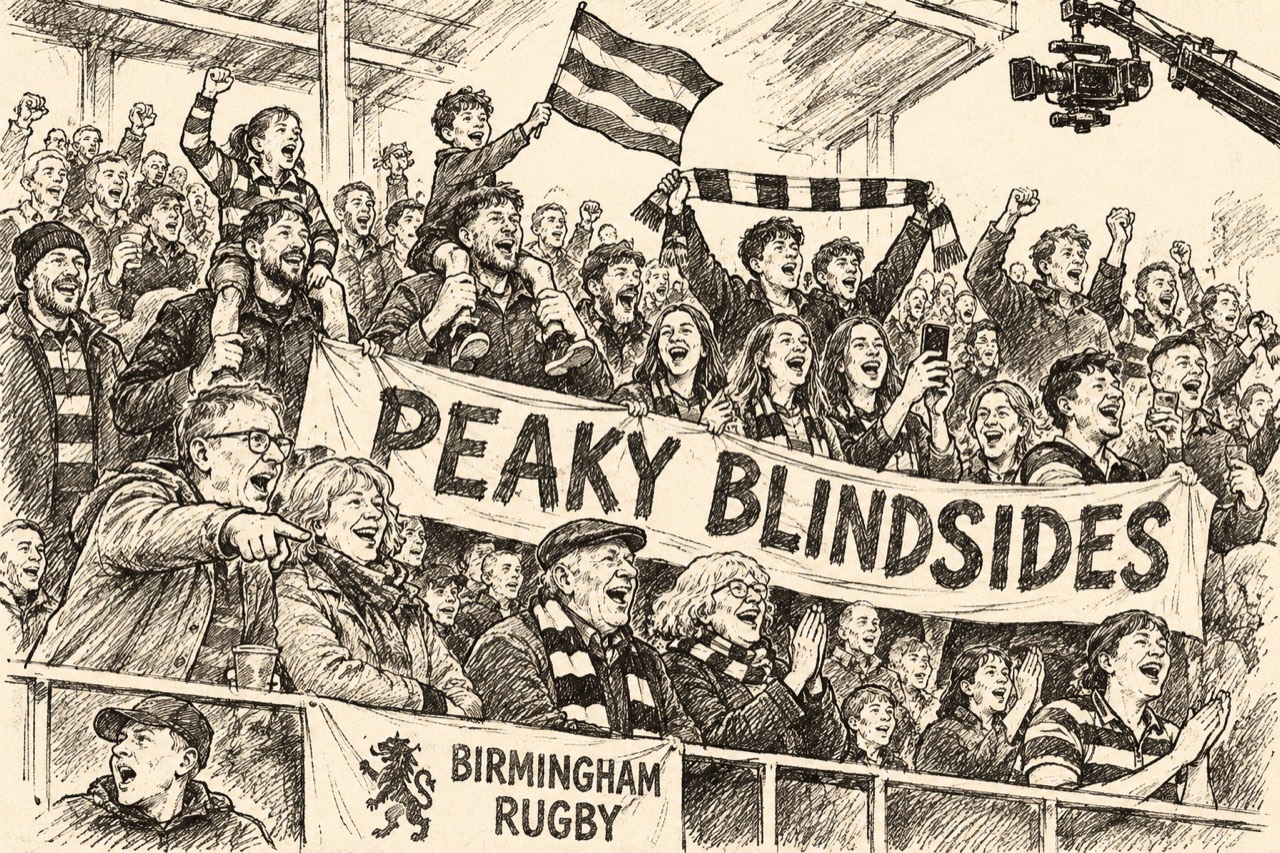
Two smaller moves alongside. Every PREM franchise plays a mandatory "Big Game" fixture each season at a larger partner stadium, as Harlequins pioneered. And internationals get regionalised. Selected lower profile Autumn fixtures and Six Nations games, e.g. Japan, Italy, etc, should be played in Manchester, Newcastle, Birmingham. The Fiji versus England match at Everton this summer showed the model works. Women's internationals, which rarely sell out Twickenham outside a World Cup final, should move around the country as a default. Filling St James' Park or the Etihad with Red Roses fans is a better experience than a half-empty Allianz Stadium. More eyes on the game.
Centralised commercial
The flip side of unified distribution is unified commercial. English rugby runs ten separate kit deals, ten separate catering contracts, ten separate ticketing systems, and ten separate merchandise operations. The buying power is diluted, the fan experience is fragmented, and the data is useless because nobody can see across clubs.
Fix by centralising the commercial back-office. A single league-wide kit deal (reportedly discussed and dismissed by the clubs more than once). A single catering contract across all stadiums. A hospitality cross-sell platform, so a corporate box bought at Bristol can be upsold next week at Bath. A shared e-commerce platform. One customer loyalty programme. One digital platform and app replacing eleven club apps, the RFU app, and the half-dozen other logins a fan currently has to manage.
Rugby England: one sport, one wallet
Everything above gets easier if the sport has one entity accountable for making it happen. The current structure, with the RFU, PREM Rugby and the CHAMP clubs pulling in different directions, is why most of this has not shipped already.
Call the new entity Rugby England. It owns the national commercial rights (broadcast, sponsorship, data, digital). It owns the central brand and the strategic direction. It owns the academies and the national player development pathway. It owns the central contracts for England players and the centralised commercial deals described above. It is run by an NFL-style commissioner with the authority to act and a board that answers to its stakeholders.
Who those stakeholders are is the structural move. Rugby England should be co-owned by the RFU and the clubs, with equity distributed by formula, roughly in line with revenue contribution and governance role. Everyone has skin in the game. The RFU and clubs can no longer act purely in their own narrow interest because they own a slice of the national pot.
The clubs keep everything that makes them clubs. Sporting operation, coaching, playing squad, matchday, local commercial and their brand identity.
The RFU's role shifts from governing body to operating partner and where sensible, co-invests in new franchises in the regions it wants to grow. It funds the academies that produce the players it then wants to pick.
A proper financial regime
Rugby England should also do what every other professional league does, which is to regulate the economics of its competition.
Four mechanisms. First, a Profit and Sustainability regime scaled to rugby's size, applied over three years, with points deductions for breaches. Second, salary caps and floors by tier. The current £6.4 million cap or lower for the PREM stays, with a CHAMP cap of, say, £3 million to prevent an arms race. A salary floor set at 70 per cent of cap would prevent zombie franchises collecting central revenue without competing.
Third, drop the ban on foreign-based players for England selection. The central contracts already incentivise (most) top England-qualified players to play in the English system. The additional ban is a belt-and-braces measure that solves no problem and it keeps artificial wage pressure on an insolvent league. A player good enough for Toulouse or Bordeaux to pay him more than an English club can afford (see brothers Jack and Tom Willis) is a player the league cannot sensibly keep and star talent the national team can’t afford to miss.
Fourth, more speculatively, run an annual televised combine for high school and university-age players, with physical tests and skills drills broadcast on free-to-air TV and/or streamed on YouTube. Franchises draft from the pool, weighted toward competitive balance, as the NFL does, aimed at players outside the current pathway, with the fan-acquisition upside of making a national story of the next generation.
The women's game as strategic asset
The Red Roses are the best England team in any team sport right now and the fastest-growing fan acquisition funnel in English rugby. The 2025 World Cup final sold out Allianz Stadium at Twickenham. The PWR is drawing bigger crowds than at any point in its history. The audience skews younger, more female, and more open to new fans than any other segment the sport reaches.

Red Roses’ Ellie Kildunne and United States’ Sevens ace, Ilona Maher are the women’s game’s breakout talents, who also promise genuine crossover star appeal. A sport desperate for new fans has a product that is actively acquiring them. More eyes on the game.
The real question
None of the above is especially new thinking. Most of it has been proposed, in parts, by someone or other in the sport over the last decade. What is missing is anyone with the authority and the appetite to pull it together into a single plan.
A new generation of strategic investors, e.g. Red Bull at Newcastle, possibly Knighthead at Birmingham and hopefully more to come, could be the impetus the game needs. Pushing towards a proper coalition of the clubs and the RFU, forcing them to (finally) all pull in the same direction.
Fans and players all want vibrant and sustainable clubs as well as a successful national team. The only question is whether the people running English rugby want it enough.